

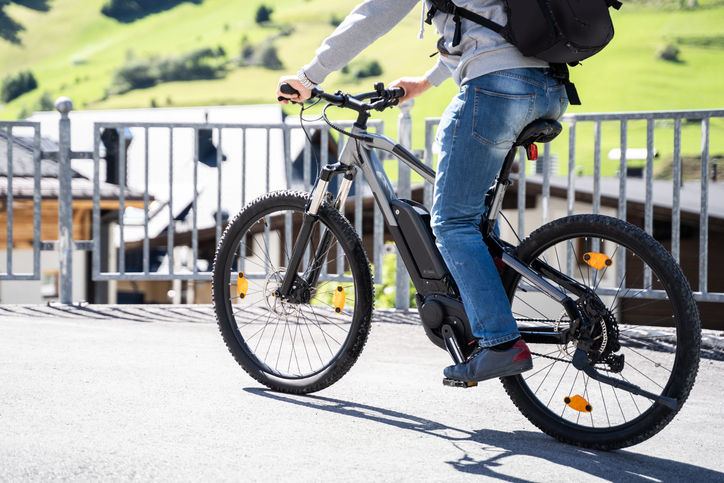
E-bikes have taken off across Texas as a convenient, affordable, and eco-friendly way to get around. But there's a question a lot of riders never think to ask until they're already in a tough spot: can you get a DUI on an e-bike? The answer depends on how Texas law classifies your bike, what happened during the stop, and what defenses may be available to you. If you or someone you care about is facing a charge like this, understanding the law — and your rights — is the most important place to start.
Charged with a DUI involving an e-bike? Don't wait to take action. Call us at (979) 316-7133 or fill out our online contact form to speak with our team today.
How Texas Classifies E-Bikes
Not all e-bikes are treated the same under Texas law, and the classification of your specific bike could play a major role in your case. Texas Transportation Code Section 551.351 divides electric bicycles into three classes based on speed and motor function. Class 1 and Class 2 bikes provide motor assistance up to 20 mph, while Class 3 bikes assist riders up to 28 mph. Importantly, Texas law generally treats qualifying e-bikes as bicycles — not motor vehicles — which is a critical distinction when it comes to criminal charges.
What "DWI" Means in Texas — and Why You Should Know the Difference
You may have heard the terms DUI and DWI used interchangeably, but in Texas, they are actually two different charges. DWI — which stands for Driving While Intoxicated — is the charge that applies to adults operating a motor vehicle in a public place with a blood alcohol concentration (BAC) of 0.08% or higher, or while impaired by drugs or alcohol to the point that normal physical or mental faculties are affected. BAC simply means the percentage of alcohol present in your bloodstream. DUI in Texas, by contrast, is a lesser charge that applies only to minors under the age of 21 who are found to have any detectable amount of alcohol while operating a vehicle. Knowing which charge you're facing matters because each comes with its own legal standards and potential defenses.
Can You Be Charged With a DWI on an E-Bike in Texas?
Here's where things get legally complicated. A DWI charge in Texas requires that you were operating a "motor vehicle." Traditional bicycles have long been excluded from that definition, and Texas law generally extends that same classification to e-bikes that fall within the state's three-class framework. That said, this area of law is still evolving, and how your case is handled can depend on the specific facts involved — including how your bike was operating at the time of the stop, where it occurred, and how law enforcement characterized the situation. Some prosecutors may argue that certain e-bikes qualify as motor vehicles depending on modifications or unusual circumstances. This is exactly why having a knowledgeable legal advocate in your corner can make a significant difference.
Your Legal Rights During an E-Bike Stop
One of the most important things you can do if you're stopped by law enforcement — for any reason — is to know your rights before the moment arrives. How you respond during a stop can shape the trajectory of your entire case. Here are the key rights every rider should understand:
- You have the right to remain silent. Beyond providing basic identification, you are not required to answer an officer's questions. Politely invoking this right is not an admission of guilt and cannot be used against you as evidence.
- You have the right to decline field sobriety tests. Field sobriety tests — like walking a straight line or standing on one leg — are voluntary in Texas. Refusing them cannot be presented as direct proof that you were intoxicated.
- You have the right to refuse a chemical test, but there are consequences. Under Texas's implied consent law, drivers who are lawfully arrested are considered to have already consented to breath or blood testing. Refusing after a lawful arrest can trigger an automatic license suspension, separate from any criminal charge.
- You have the right to an attorney. Once you are placed under arrest, you have the right to consult with a lawyer before answering any further questions. Exercise this right immediately and without hesitation.
Knowing and exercising these rights protects you in the moment and also gives your attorney more to work with when evaluating your defense options.
Defense Strategies That May Apply to Your Case
A DUI or DWI charge is not the end of the road. There are meaningful legal arguments that may be available depending on how the stop was conducted, what evidence exists, and how your e-bike is legally classified. A committed defense attorney will look closely at every detail to determine what approaches make sense for your specific situation. Here are some defense strategies that may apply:
- Challenging the motor vehicle classification. If the charge relies on treating your e-bike as a motor vehicle, your attorney may argue that it legally qualifies as a bicycle under Texas law — potentially undermining the legal foundation of the charge altogether.
- Questioning the basis for the stop. Law enforcement must have a specific, articulable reason — known as "reasonable suspicion" — to pull someone over. If that standard wasn't met, the stop itself may be challengeable, and any evidence gathered as a result could be affected.
- Disputing the accuracy of BAC test results. Breath and blood tests are not always reliable. Factors like improper equipment calibration, testing errors, or medical conditions can compromise the accuracy of these readings.
- Challenging the officer's observations. Claims that you appeared impaired are based on subjective judgment. Your attorney may be able to show that other factors — such as fatigue, allergies, or a medical condition — were misinterpreted as signs of intoxication.
- Questioning whether probable cause existed for the arrest. Even when a stop is valid, an arrest still requires a higher legal threshold called probable cause. If that standard wasn't satisfied, the arrest itself may be open to challenge.
A well-built defense is not about spinning a story — it's about holding the prosecution to its legal burden and making sure your rights were respected at every step of the process.
What Are the Potential Consequences of a Conviction?
If an e-bike DWI charge moves forward and results in a conviction, the legal penalties in Texas can be significant. A first-offense DWI is generally a Class B misdemeanor, which can carry fines up to $2,000, a jail sentence, and a license suspension. If your BAC was 0.15% or higher, the charge can be elevated to a Class A misdemeanor with even steeper penalties. Beyond the courtroom, a conviction can affect your job opportunities, housing applications, and certain professional licenses — consequences that can follow you long after any sentence is served. Acting quickly and working with a defense attorney from the start gives you the best chance of protecting your future.
Talk to an Angleton Criminal Defense Attorney About Your DUI Case
A DUI or DWI charge connected to an e-bike involves legal questions that many people — and even some attorneys — haven't encountered before. Texas law in this area is still developing, and there may be strong arguments available that you aren't even aware of yet. At BTR Law, our team takes every case seriously and works hard to make sure our clients understand exactly where they stand and what options they have. You deserve a real defense — not a generic one. Call us at (979) 316-7133 or reach out through our online contact form to schedule a consultation with our team today.